
Roadway safety is at a critical inflection point. In 2023 alone, crashes in the U.S. resulting in injury or fatality reached 2.4 million nationwide. For planners, engineers, consultants, and policymakers, understanding where and why risk occurs is essential to making meaningful improvements.
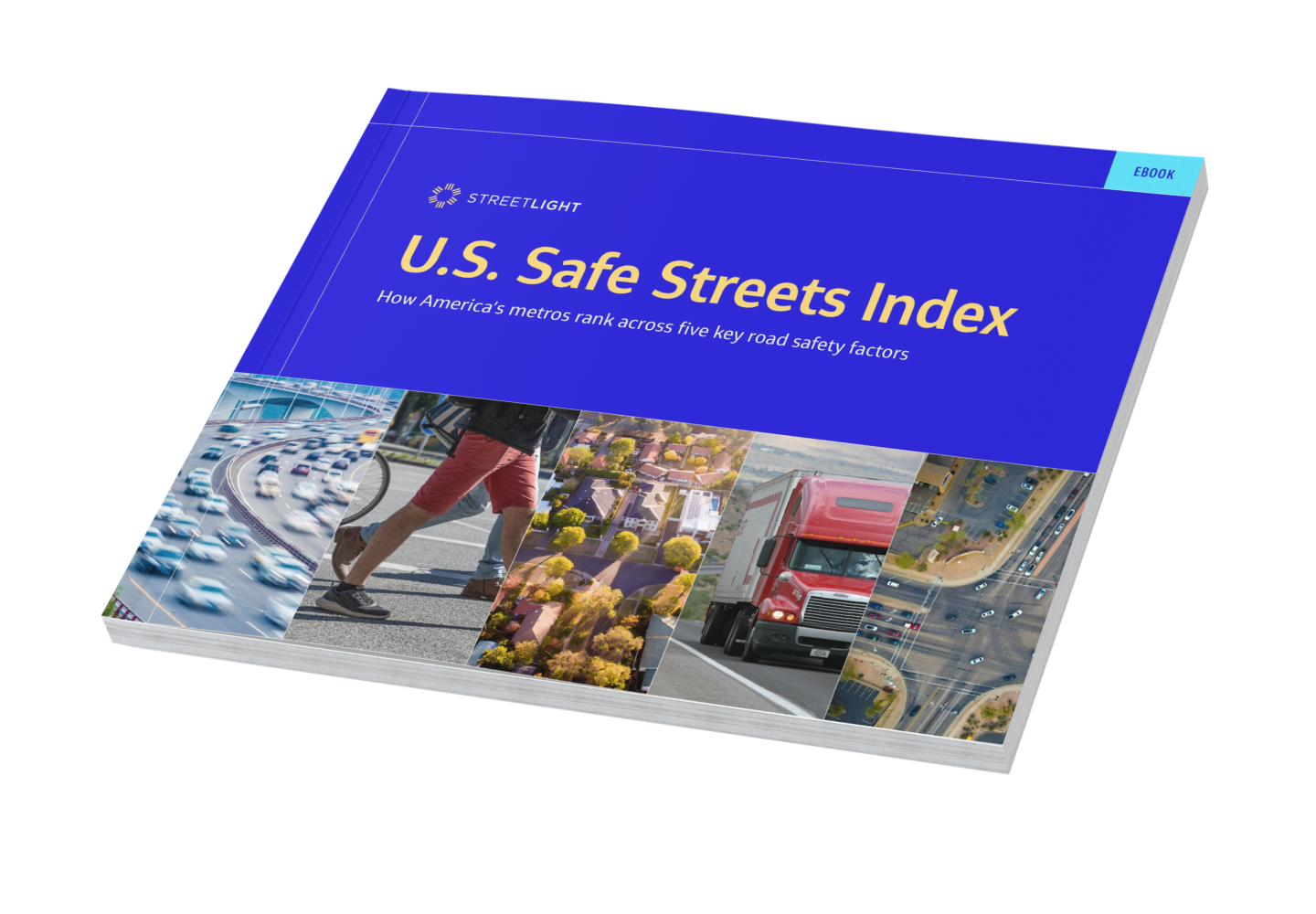
The U.S. Safe Streets Index analyzes the 100 most populated metros across five weighted safety factors—revealing how driving exposure; speed differentials; speeds on pedestrian roadways; truck activity, and residential speeding influence roadway risk. From dense, transit-oriented regions that limit VMT exposure to metros grappling with residential speeding or freight-related risk, each community’s safety profile is unique. This report sheds light on the levers with the most potential for improvement.
Download the U.S. Safe Streets Index to learn:
-
 Rankings of the top 100 U.S. metros, including performance and data-driven insights across all five safety factors.
-
Best and worst performers by metric, including Vehicle Miles Traveled (VMT), vehicle speed measures, pedestrian risk, and truck activity.
-
Data-driven insights to guide targeted interventions, helping agencies prioritize investments where they’ll have the greatest impact
Access rich, multimodal data inputs to
power all your safety planning efforts

Rank and identify risky roads and intersections with granular volume and speed data to inform key locations suited for safety interventions.
Measure segment-level bicycle and pedestrian activity to pinpoint where protected infrastructure is needed.
Analyze truck activity on your streets and highways, segmented by vehicle class to see how freight routes impact safety.
